
Sidewalks, Walkways & Flatwork
Create safe, attractive pathways that connect your outdoor spaces and enhance your property.
Why Quality Walkways Matter
Sidewalks and walkways are the paths people use every day to get around your property. A well-built walkway is safe, level, and attractive. It guides visitors from the street to your front door, connects your driveway to your backyard, or creates a pleasant garden path. Poor quality walkways crack, settle, and become trip hazards that can hurt someone and create liability issues for you.
In the Pacific Northwest, walkways take a beating from rain, freeze-thaw cycles, and tree roots. Concrete is the best material for lasting walkways because it handles these conditions better than pavers that shift or asphalt that breaks down. A properly built concrete walkway stays level and functional for decades with minimal maintenance.
We have installed miles of sidewalks and walkways throughout Issaquah and the surrounding areas. From front entry walks to backyard garden paths, we know how to build walkways that last. When you work with our concrete walkway team, you get quality workmanship that improves your property and keeps people safe.
Types of Concrete Flatwork We Install
Flatwork is the term contractors use for horizontal concrete surfaces. It includes any concrete that is poured flat rather than vertical like walls or footings. Here are the most common flatwork projects we handle:
- Front Walkways: The path from your sidewalk or driveway to your front door. This is the first impression visitors get, so it should be attractive and welcoming.
- Side Yards and Service Paths: Utility paths that connect different areas of your property or provide access to gates, meters, and storage areas.
- Garden Paths: Meandering walkways through landscaped areas. These can be straight and functional or curved and decorative depending on your design.
- Courtyard Pavement: Large flat areas between buildings or in enclosed spaces. Similar to a patio but typically used as circulation space rather than gathering space.
- Accessible Ramps: ADA-compliant ramps that provide wheelchair and walker access to homes and buildings. These require specific slopes and handrail details.
Each type of flatwork has different requirements for width, thickness, slope, and finish. Front walkways should be at least 3 to 4 feet wide so two people can walk side by side. Service paths can be narrower since they get less traffic. All walkways need proper slope for drainage, typically a quarter inch per foot to move water away from buildings.
Design and Installation Process
Planning a walkway starts with understanding how it will be used. High traffic areas like front walks need to be wider and more durable than occasional-use garden paths. We look at the route, existing grades, drainage patterns, and how the walkway connects to other concrete work like your driveway or patio.
Design options range from simple to elaborate. A basic broom finish walkway is affordable, functional, and timeless. If you want something more distinctive, we can add borders, bands of color, exposed aggregate, or stamped patterns. Curved walkways create visual interest and flow naturally through landscaping. Straight walks are more formal and work well with traditional home styles.
Installation Steps
We excavate the walkway route to the proper depth, removing grass, roots, and any unstable soil. A compacted gravel base goes in next, providing stable support and drainage. This base layer prevents settling and keeps the concrete from cracking.
Forms define the edges and control the thickness of the concrete. For curved walks, we use flexible form material that bends to create smooth curves. We install the forms at the correct elevation and slope so water drains properly. Control joints are planned at regular intervals to manage cracking.
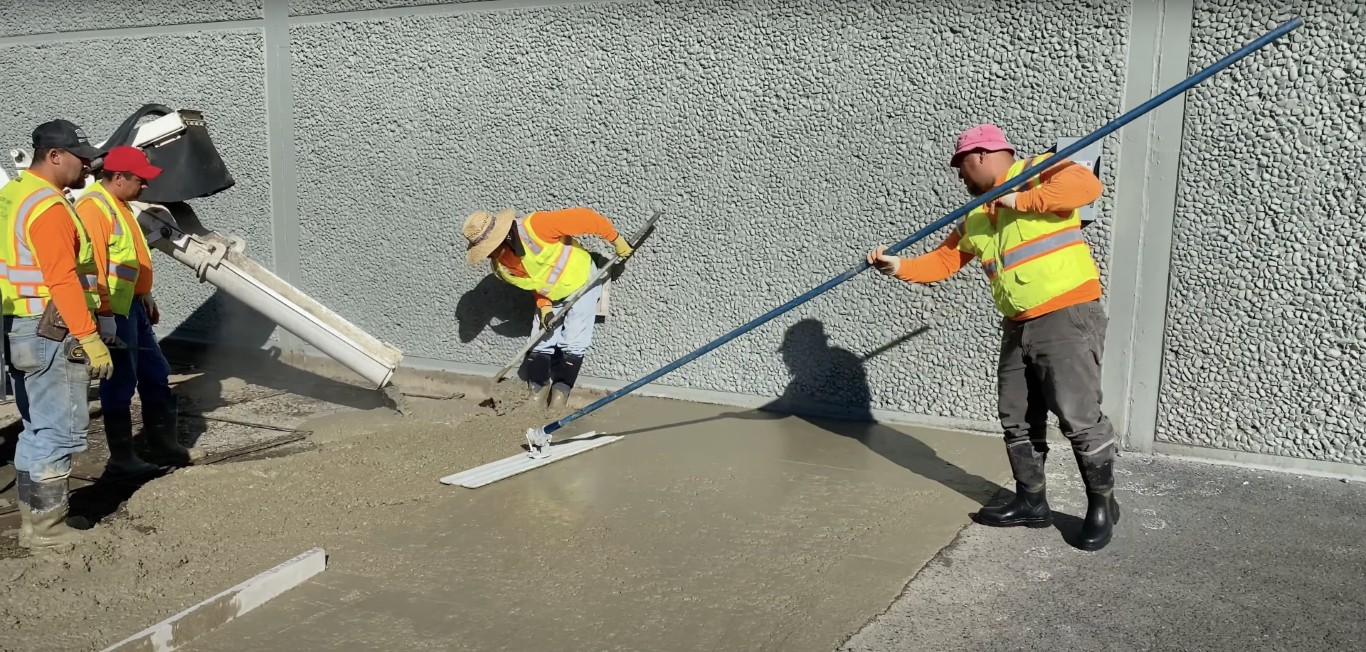
When the concrete is poured, we work it into place, smooth the surface, and apply your chosen finish. Edges are rounded and smoothed for a clean, professional look. After finishing, the concrete needs time to cure before people can walk on it. We protect the fresh concrete and keep it moist during the curing period.
Once curing is complete, we remove the forms and backfill the edges. The finished walkway should tie smoothly into existing concrete, lawns, and landscaping. Proper site cleanup and restoration leave your property looking great with a beautiful new walkway.
Common Questions About Concrete Walkways
Ready to Build Your Walkway?
Get a free estimate for your sidewalk or walkway project. We will help you design the perfect solution for your property.
Get Your Free Estimate